







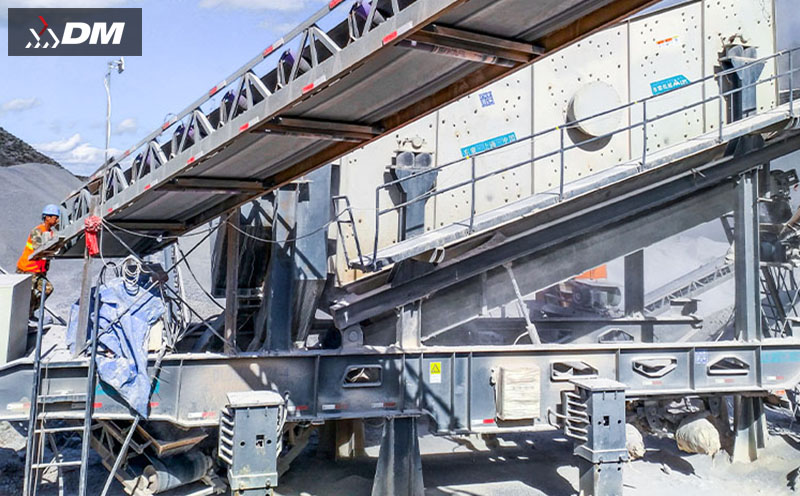
I. Kenya's Urbanization Dilemma: Dual Challenges of Waste Siege and Resource Shortage
With the accelerated urbanization process in Kenya, the population of core cities such as Nairobi, Mombasa, and Kisumu continues to grow, leading to an explosive increase in urban solid waste output—Nairobi alone generates over 5,000 tons of urban solid waste per day, including 40% construction waste (bricks, concrete blocks), 55% domestic waste (plastic, metal, kitchen waste), and the rest commercial waste.
Traditional disposal methods struggle to cope with this pressure: more than 70% of solid waste is disposed of through open-pit landfilling, which not only occupies over 500 mu of valuable land each year but also causes leachate to pollute soil and groundwater due to rainwater erosion, threatening the health of nearby residents; on the other hand, Kenya's infrastructure projects (highways, affordable housing, commercial complexes) have a growing demand for construction aggregates, with a market gap of 3 million tons in 2024. Some regions need to import from Tanzania and Uganda, driving up project construction costs.
The contradiction of "waste becoming a burden and resources relying on imports" has become a key bottleneck restricting the sustainable urban development and infrastructure acceleration in Kenya. How to convert massive solid waste into usable resources has become an urgent issue for local governments and enterprises.
II. Urban Solid Waste Sorting and Crushing Production Line: Core of Transformation from "Waste" to "Resource"
Taking "intelligent sorting + graded crushing + resource recycling" as the core, the urban solid waste sorting and crushing production line builds a "full-process solid waste treatment system", completely breaking the limitations of traditional landfilling models, realizing over 80% resource utilization of urban solid waste, and providing a one-stop solution for "waste-to-resource" in Kenya. Its core advantages accurately match local needs:
1. Intelligent and Precise Sorting, Separating Various Usable Resources
The front end of the production line is equipped with a "multi-dimensional intelligent sorting system", which achieves efficient classification and separation for the complex composition of urban solid waste:
- Pretreatment link: A drum screen is used to initially separate large materials (bricks, concrete blocks) from small debris (plastic, paper scraps), with a screening efficiency of 100 tons per hour, avoiding blockages in subsequent crushing links;
- Precise sorting module: Integrates metal sensors, optical recognition systems, and magnetic suction devices to automatically identify and separate metals (iron, aluminum, etc.) with a recovery rate of 98%, plastics with a recognition accuracy of 95%, and flexible materials such as wood and fabrics from solid waste;
- Manual auxiliary channel: Sets up manual sorting stations for secondary sorting of special materials not identified by the intelligent system (such as glass and steel bars in construction waste) to ensure sorting purity.
Through this system, recyclable resources (metals, plastics) and crushable materials (bricks, concrete) in urban solid waste are completely separated, laying the foundation for subsequent resource utilization and avoiding impurities affecting the quality of recycled aggregates.
2. Graded Crushing + Shaping, Producing High-Standard Recycled Resources
For the sorted construction waste (bricks, concrete blocks), the production line adopts a graded treatment process of "primary crushing - secondary crushing - tertiary crushing - screening" to produce recycled resources that meet Kenya's BS 882 standard:
- Graded crushing: The primary crushing module processes large materials above 500mm, the secondary crushing module crushes them to below 50mm, and the tertiary crushing module processes them into different particle sizes according to needs, avoiding material waste caused by over-crushing;
- Shaping optimization: Uses impact crushing technology to shape recycled aggregates, reducing the proportion of needle-like particles (below 15%) and improving aggregate strength (compressive strength above 30MPa);
- Multi-stage screening: Through a three-layer vibrating screen, the crushed materials are divided into three types of products—10-30mm recycled coarse aggregates (for road base paving), 5-10mm recycled medium aggregates (for concrete bedding), and 0-5mm recycled manufactured sand (for mortar mixing), with a classification efficiency of 95%.
These recycled resources can completely replace natural aggregates and are suitable for various infrastructure projects in Kenya, alleviating the pressure of natural sand and gravel resource shortage and reducing the raw material procurement costs of projects.
3. Environmental Closed-Loop Treatment, Meeting Kenya's Green Development Requirements
The production line adopts a full-process environmental protection design to control pollution from the source and meet Kenya's strict environmental protection policies:
- Dust control: The crushing and screening links are equipped with fully enclosed corridors and high-efficiency pulse bag filter systems, reducing dust emission concentration by more than 95%, which is far below the limit value of Kenya's environmental protection standards;
- Leachate treatment: Sets up a sump to collect sewage generated during sorting and crushing, which is recycled for equipment cooling and site cleaning after sedimentation, filtration, and disinfection, realizing zero discharge of water resources;
- Waste reduction: The proportion of non-recyclable inert waste (such as a small amount of sludge and uncrushable large debris) is less than 10%, which can be compressed and used as landfill cover soil, reducing landfill volume by 80% compared with traditional landfilling models.
The operating noise of the production line is reduced by approximately 50% through sound insulation covers, shock absorption pads and other devices, avoiding impact on the surrounding environment and truly realizing "green treatment and recycling".
4. Efficient and Stable Operation, Adapting to Kenya's Large-Scale Treatment Needs
The production line adopts modular design and automatic control to ensure efficient and stable operation:
- High processing capacity: A single production line can handle 800-1200 tons of urban solid waste per day, meeting the solid waste treatment needs of small and medium-sized cities; large-scale production lines can achieve a daily processing capacity of over 2000 tons through multi-module parallel connection;
- Automatic control: Equipped with a central control system, operators can real-time monitor the operation status of each link of sorting, crushing, and screening, and adjust process parameters. Only 3-5 personnel are needed for a single production line to complete the full-process operation, greatly saving labor costs;
- Low maintenance cost: Core equipment adopts wear-resistant materials, extending the service life of vulnerable parts by 30%; modular design makes troubleshooting and component replacement more convenient, with annual shutdown maintenance time not exceeding 50 hours.
III. Practical Case in Kenya: "Resource Revolution" of a Solid Waste Treatment Plant
After a solid waste treatment enterprise in Mombasa introduced the urban solid waste sorting and crushing production line, it completely changed the local solid waste treatment pattern, achieving a win-win situation of environmental and economic benefits:
- Treatment scale: Processes 1000 tons of urban solid waste per day, of which 400 tons of construction waste are converted into recycled aggregates and manufactured sand, and 200 tons of recyclable resources (metals, plastics) are recycled and sold;
- Resource utilization: Recycled aggregates are supplied to the Mombasa Port expansion project and suburban highway projects, with monthly sales of 150,000 US dollars; recycled metals are baled and exported to South Africa, generating additional annual income of over 80,000 US dollars;
- Environmental improvement: After the project was put into operation, the land occupation rate of the landfill in southern Mombasa decreased by 70%, and the groundwater pollution indicators in the surrounding area dropped by 60%, winning the "Green Demonstration Project" certification from Kenya's Ministry of Environment;
- Cost savings: Local infrastructure projects using recycled aggregates from this production line have reduced raw material procurement costs by 40% compared with natural aggregates, attracting a large number of construction enterprises to establish long-term cooperation.
The person in charge of the treatment plant said: "In the past, we could only watch as waste occupied land and polluted the environment. Now, through this production line, waste has become a profitable resource. It not only helps the government solve problems but also creates benefits for the enterprise. This is the solution Kenya's urban development needs."
IV. Operation Optimization Suggestions for the Production Line in Kenya
Combined with the characteristics of solid waste composition and operating environment in Kenya, the following optimization strategies are recommended:
- Raw material adaptation: In view of the large proportion of flexible materials such as plastics and fabrics in Kenya's urban solid waste, an additional shredding module for flexible materials can be installed to avoid winding equipment and affecting operation;
- Policy connection: Communicate with local governments in advance to obtain solid waste treatment subsidies and tax incentives for recycled resource sales, reducing project operating costs;
- Market linkage: Sign long-term supply agreements with surrounding infrastructure projects and building materials enterprises to ensure stable sales channels for recycled aggregates and manufactured sand;
- Maintenance guarantee: Reserve core vulnerable parts (such as crushing jaws and screen meshes) and cooperate with local maintenance teams to improve fault response speed and avoid long-term shutdowns.
Conclusion
Against the background of Kenya facing the dual pressures of "waste siege" and "resource shortage", the urban solid waste sorting and crushing production line, with "intelligent sorting, graded crushing, environmental closed-loop, and resource recycling" as the core, has opened up a new path for "waste-to-resource".
It not only solves the problem of urban solid waste disposal, reduces land occupation and environmental pollution, but also produces standard-compliant recycled resources, alleviates the pressure of raw material shortage in infrastructure projects, and reduces construction costs. From environmental benefits to economic benefits, from short-term disposal to long-term sustainable development, this production line injects green momentum into Kenya's urban modernization process, becomes a key carrier for promoting the development of "circular economy", and helps Kenya achieve the development goal of "clean cities and self-sufficiency in resources".
If you would like to get help immediately, you can also fill your requirements on the following form, we will contact you on the right time.


Get In Touch